What I Learned After 648 Hours of Listening to AI and SEO Experts: The Real Talk Guide to LLM Optimization

Here’s What 648 Hours of Expert Conversations Taught Me
So picture this: It’s 9 PM on a Tuesday, I’m folding laundry (because that’s apparently when my best ideas hit), and I’m listening to yet another AI expert drop bombs about how search is fundamentally broken.
That was month three of what turned into a nine-month deep dive that honestly started by accident.
I was supposed to be researching one client project. One. Instead, I fell down the rabbit hole of AI and SEO content that made me question everything I thought I knew about this industry. 648 hours later, yes, I actually tracked it because I’m that person, I emerged with pages of notes, a completely rewired brain, and the realization that most of us are still playing the old game.

Here’s the thing that kept me up at night during this journey: Every expert I listened to was saying the same thing in different ways. The shift isn’t coming, it’s here. And while we’re still debating whether AI content is “good enough,” the smartest people in our industry are already three moves ahead.
I’m not writing this as the guy who figured it all out. I’m writing this as the guy who spent way too many hours listening to the people who did figure it out, and I want to save you from having to do the same deep dive I did.
What you’re about to read isn’t my revolutionary theory, it’s the collective wisdom of the experts who are actually building this future, synthesized through the lens of someone who’s been in the trenches with you. Think of me as your research assistant who went a little overboard and now wants to share the good stuff.
The specialists I’ve been learning from aren’t just talking about tweaking your title tags anymore. They’re talking about training your content to think like an AI, understanding how large language models actually process information, and building content strategies that work with the new reality instead of against it.
And honestly? Once you see what they’re seeing, you can’t unsee it.
**Disclaimer everything from here on out is just looking at the effect of AI LLMs to “traditional SEO”. This 100% has blinders on from here on out.**
The Wake-Up Call That Started My Research Journey
Let me tell you about the moment that sent me down this 648-hour rabbit hole.
It was February 2025, and I was procrastinating on a client report (don’t judge me, we’ve all been there) when I stumbled across Kevin Indig’s blog post called “Death of the Keyword.”
I almost scrolled past it, I mean, how many “SEO is dead” hot takes can one person read? But something made me click. Maybe it was the fact that Kevin’s not one of those clickbait gurus. The guy’s legitimately smart, has worked at companies like Shopify and Atlassian, and when he says something, it’s usually worth listening to.
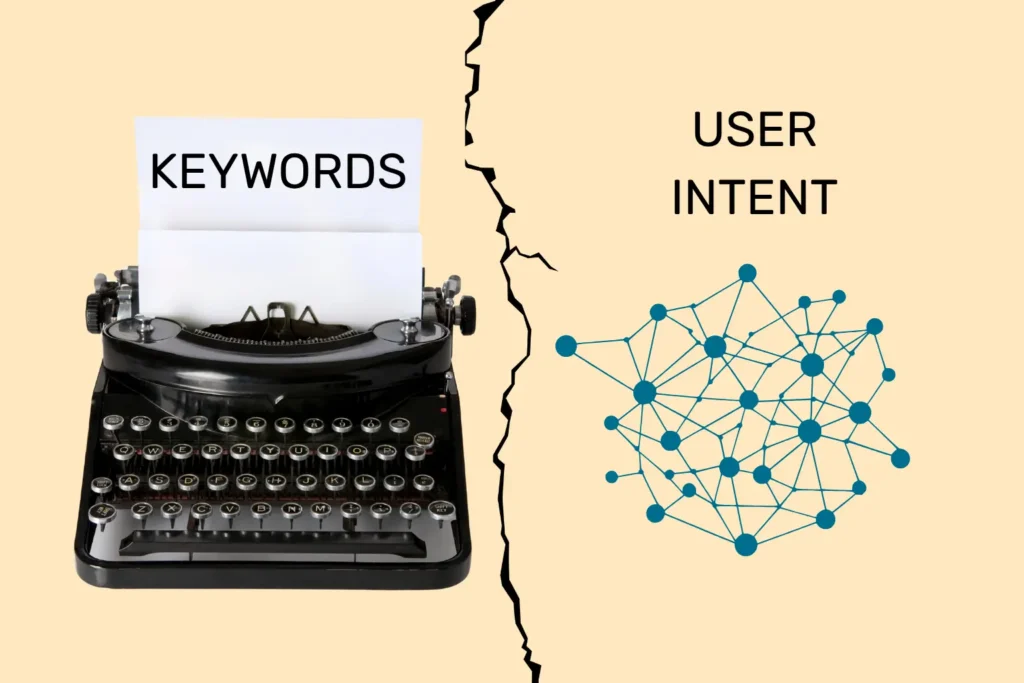
Then I hit this line: “The keyword doesn’t have a future in search. What does is intent, and LLMs are much better at understanding it.”
I literally stopped mid-sip of my coffee and read it again. And again.
Here’s a guy who’s been deep in the technical side of SEO for years, and he’s basically saying that the foundation of everything we’ve been doing, keywords, is becoming irrelevant. Not “needs to evolve” or “should be supplemented.” Irrelevant.
That sentence broke something in my brain. The good kind of broken.
So I started digging. I consumed every podcast, webinar, and expert analysis I could find. I listened to Wil Reynolds from SEER Interactive explain how his budget for marketing headcount was cut by 92% and how he’s now back in the weeds, handling marketing tasks ranging from social media to newsletters and more. I watched expert interviews & presentations from companies like Search with Candour, iPullrank and Sitebulb about AI, SEO, citations, tracking, and way more. I absorbed insights from semantic search experts and vector embedding specialists.
What I discovered was both terrifying and exciting: we’re not just dealing with an algorithm update. We’re dealing with a fundamental shift in how information gets discovered and consumed.
The strategists and practitioners shaping this field weren’t just talking about tweaking our existing strategies, they were describing an entirely new game with different rules, different success metrics, and different ways of thinking about content.
That’s when I realized I had two choices: keep doing what I’d always done and hope for the best, or dive deep into understanding what the smartest people in the industry were saying about where we’re headed.
I chose to dive deep. And if you’re still reading this, I’m guessing you’re ready to do the same.
What the Experts Are Really Saying (And Why Most People Are Missing It)
In my extensive review of expert discussions, a clear pattern emerged:
Traditional search engines showed you a list of links and said, “Good luck, figure it out yourself.” AI systems are like having a research assistant who reads everything, synthesizes the best information, and gives you a direct answer, often without ever sending you to the original source.
My research indicates your audience behavior is shifting faster than most people realize. A recurring theme from the specialists I followed is the same trend: people are asking AI systems for answers instead of scrolling through search results.
But here’s where it gets interesting (and where the opportunity lies, as many industry insiders have noted): these AI systems still need to get their information from somewhere. They’re reading, analyzing, and citing content from real websites and real experts.
The question that kept surfacing in these discussions is: will AI systems cite you, or will they cite your competitors?
From what I’ve learned, that’s what LLM optimization is really about. It’s not about getting clicks anymore, it’s about getting cited. It’s not about ranking #1 on Google, it’s about being the authority that AI systems trust enough to reference.
And here’s something multiple practitioners have pointed out: the companies winning at this aren’t necessarily the ones who dominated traditional SEO. They’re the ones who figured out how to speak AI’s language.
Want to see what this looks like for your business?
Get a free 5-minute video showing how Expert Insight Sessions can turn your expertise into content that works.
Get My Free VideoThe Five Pillars I Keep Hearing About (From Every Expert I’ve Studied)
My analysis of expert commentary revealed five core principles that keep coming up in every serious discussion about LLM optimization. These aren’t my theories; these are the consistent themes from the smartest people in the industry.
And here’s what’s wild: nearly every specialist I listened to mentioned at least four of these five concepts. It’s like they’re all reading from the same playbook, except that playbook doesn’t exist yet, which is exactly why I’m writing this.
1. Vector Embeddings (The Science Behind AI Understanding)
This one sounds intimidating, but the specialists I followed emphasize its importance. And honestly, once you get it, it changes everything about how you think about content.
A key takeaway is that AI systems don’t think in keywords. They think in concepts and relationships. When you write about “email marketing,” the AI doesn’t just see those two words. It sees connections to customer retention, automation, personalization, deliverability, and dozens of other related concepts.
Practitioners consistently explain that the magic happens when your content demonstrates deep understanding of these relationships. Instead of just mentioning “email automation,” you’d connect it to customer lifecycle stages, behavioral triggers, and business outcomes.
This is why comprehensive, expert-level content performs so much better with AI systems than surface-level keyword-stuffed articles. The AI can literally “see” the depth of your knowledge through these connections.
2. Multi-Platform Optimization (What the Strategists Focus On)
Here’s a reality check that came up in every strategic discussion I listened to: your audience isn’t just using ChatGPT. They’re using Claude, Perplexity, Google’s AI Overviews, and whatever new AI tool launches next month.
The consensus among industry leaders is that each system has its own preferences and quirks. Content that performs well in ChatGPT might get ignored by Claude. The key, as many have noted, is optimizing for consistent performance across multiple platforms.
This was probably the most humbling realization for me. I’d been thinking about “AI optimization” like it was one thing, when really it’s like optimizing for five different search engines that all speak slightly different languages.
3. Zero-Click Optimization (The Mindset Shift Every Expert Mentions)
This was probably the most consistent theme across all the expert content I consumed. Every serious practitioner talked about this fundamental mindset shift, and it honestly broke my brain a little.
As many in the field have noted, we’re so conditioned to measure success by traffic and clicks that it feels wrong to optimize for citations that might never send traffic to your site.
But here’s what multiple industry insiders have observed: when AI systems cite your brand as an authority, people remember your name. They search for you directly later. They start to see you as the go-to expert in your field.
Many describe it as brand building on steroids, where the long-term value often exceeds what you’d get from traditional traffic.
I’ll be honest, this one still makes me a little uncomfortable. My whole career has been built on driving traffic. But after listening to enough smart people explain why this matters, I’m starting to see it differently.
4. Semantic Chunking (What Every AI Expert Talks About)
This concept came up in literally every advanced discussion I listened to about AI optimization. And I mean every single one.
A common point made is that AI systems don’t read like humans. They scan for discrete, self-contained chunks of information that can stand alone and make sense without context. Multiple specialists described it like creating LEGO blocks of knowledge; each piece should be complete and useful on its own.
The practitioners I’ve studied break this down practically: instead of writing one massive section about “Email Marketing,” you’d create chunks like “Personalization Strategies That Drive Engagement,” “Automation Workflows for Different Customer Journeys,” and “Privacy Compliance in the Post-GDPR Era.”
Each chunk answers a specific question completely. This approach is exactly what AI systems prefer because they can extract what they need without parsing through fluff.
The lightbulb moment for me? I realized I’d been writing content like a human who wants to tell a story, when I should have been writing like someone who wants to be quoted by a really smart robot.
5. Brand Presence as a Citation Multiplier (What Separates the Leaders)
A point that came up again and again in advanced discussions is that AI systems don’t just cite well-written content; they cite recognizable brands.
The consensus among industry leaders is that consistent brand presence across platforms acts as a semantic authority signal. When AI systems repeatedly encounter your brand in different trusted contexts—on your site, in bylines, podcasts, and publications—they’re more likely to elevate your content in responses.
What stood out in the research is that brand consistency across channels (tone, expertise, messaging) strengthens AI trust. It’s not about being famous, it’s about being coherent and present wherever your audience (and AI crawlers) look.
Put simply: every piece of content reinforces or weakens your brand’s citation potential. The strongest performers treat brand as the connective tissue that amplifies every other optimization pillar.
This was my biggest “aha” moment. All this time I’d been thinking about content as individual pieces, when I should have been thinking about building a brand that AI systems learn to trust and cite consistently.
The LLM Seeding Strategy (Backlinko’s Framework That Everyone’s Talking About)
The folks at Backlinko coined this term, and it’s become quite popular.
According to their research, you’re not trying to rank #1 on Google anymore. You’re trying to become the source that AI systems automatically think of when someone asks a question in your area of expertise.
Based on their framework and the commentary I’ve studied, the process works like this:
Step 1: Create AI-Friendly Content - What I’ve gathered is that this means creating comparison tables, FAQ sections, step-by-step guides, and other formats that AI systems can easily parse and extract from.
Step 2: Let AI Systems Discover It - Unlike traditional SEO where you’re optimizing for crawlers, practitioners explain that you’re optimizing for AI systems that are constantly learning and updating their knowledge.
Step 3: Get Cited - When someone asks a related question, your content appears in the AI’s response, often without a link, but with clear attribution to your brand.
Step 4: Reap the Benefits - According to the case studies I’ve reviewed, users remember your brand, search for you directly, and start seeing you as the authority in your space.
Numerous specialists have shared examples of this working across different industries. The companies that embrace this strategy are building authority and brand recognition at a pace that would have been impossible with traditional SEO alone.
Content-Specific Strategies (What the Experts Recommend for Different Content Types)
A takeaway from the many webinars and podcasts I consumed is that different types of content require different optimization approaches. Here’s what the specialists recommend:
Blog Posts: The Expert Consensus on Question-Driven Content
After listening to dozens of content strategy experts, here’s the consistent advice I keep hearing:
If you’re still writing blog posts around keyword lists, you’re missing the point entirely.
One of the most echoed sentiments is that AI systems don’t care about your target keyword. They care about whether your content comprehensively answers the questions people are actually asking.
Here’s the approach that many recommend:
Start with the answer. Don’t bury the lead. If someone asks “What are the best email marketing practices for 2025?” start your post with a clear, direct answer. Then spend the rest of the post backing it up with details, examples, and evidence.
Structure for scanning. A consistent piece of advice is to use headings that could stand alone as questions. Instead of “Implementation,” use “How Do You Actually Implement These Strategies?” AI systems love this, as the specialists note, because they can extract exactly the section they need.
Include comparison content. It’s been pointed out that AI systems cite comparison content more than almost anything else because it directly addresses the evaluative questions people ask. “Which tool is better?” “What’s the difference between X and Y?” These are often described as AI citation gold mines.
Build comprehensive FAQ sections. Not just basic questions, but the nuanced, expert-level questions that demonstrate deep industry knowledge. These sections, I’ve learned, are incredibly valuable for AI citation.
Product Pages: What B2B Experts Are Saying
Product pages present unique challenges, a point often raised by B2B optimization specialists. They need to balance commercial intent with informational value.
The consistent recommendations include:
Use natural language titles. Instead of “SEO Tool Keyword Research Software,” the suggestion from specialists is “Comprehensive Keyword Research Platform for SEO Professionals and Content Marketers.” It seems AI systems prefer descriptive, conversational language.
Structure specifications clearly. The technical experts I studied emphasize presenting product details in formats that AI systems can easily parse. Use consistent formatting and include plain-language explanations of what technical specs mean for users.
Create robust Q&A sections. Address every possible question about your product; this is a frequent recommendation. Compatibility, sizing, installation, troubleshooting—everything. When someone asks an AI system about products like yours, you want your Q&A section to be the source it cites.
Provide use case examples. It has been emphasized that AI systems love specific, real-world examples. Instead of just listing features, explain exactly how different types of customers use your product to solve specific problems.
Service Pages: The Professional Services Expert Approach
For service pages, professional services specialists suggest they need to position you as the expert that AI systems automatically think of when someone asks about solutions in your field.
The consistent recommendations I’ve encountered include:
Lead with problems, not services. Structure your pages around the specific challenges your clients face. It’s understood that AI systems are more likely to cite content that directly addresses user problems.
Explain your methodology. Specialists consistently recommend providing detailed explanations of how you approach problems and deliver results. My research shows that AI systems cite specific processes and frameworks more often than generic service descriptions.
Include detailed case studies. Present these in structured formats that clearly show the challenge, approach, and outcomes. Quantifying results wherever possible is emphasized; AI systems love citing specific metrics and achievements.
Build comprehensive FAQ sections. It’s also recommended to address every possible concern about working with you. Pricing, timelines, processes, expected results. Make it easy for AI systems to find and cite information about your services.
Want to see what this looks like for your business?
Get a free 5-minute video showing how Expert Insight Sessions can turn your expertise into content that works.
Get My Free VideoThe Tools the Experts Actually Recommend (Based on My Research)
From my research, I’ve compiled the tools that consistently get mentioned by the most credible sources. Some are described as game-changers. Others are expensive distractions.
The Tools Every Expert Mentions
Profound - This tool came up in almost every advanced discussion I listened to about LLM monitoring. From what I’ve gathered, it tracks how AI systems are mentioning your brand across platforms and gives you actionable insights for improvement. Multiple specialists specifically mentioned the LLM Feed Optimizer feature as being particularly valuable.
LookerStudio Dashboard - I would have to say 30% of presentations and newsletters had included someone sharing a LookerStudio Dashboard with ways to track AI traffic to your site.
Screaming Frog SEO Spider - Several technical experts have noted that it now includes vector embedding analysis, which they describe as incredibly useful for advanced practitioners.
Analytics Tools - The measurement experts consistently emphasize the importance of tracking referral traffic from AI sites.
What the Experts Warn Against
In the commentary I’ve consumed, a common warning is that most traditional SEO tools are struggling to adapt to the AI era. They’re adding “AI features” that are often just repackaged versions of existing functionality. A number of specialists have warned about being skeptical of tools that promise AI optimization without demonstrating actual AI citation tracking.
How the Experts Measure Success (The New Metrics That Matter)
This was probably one of the most eye-opening aspects of my research. A startling consensus is that everything we’ve been taught about measuring SEO success is becoming irrelevant.
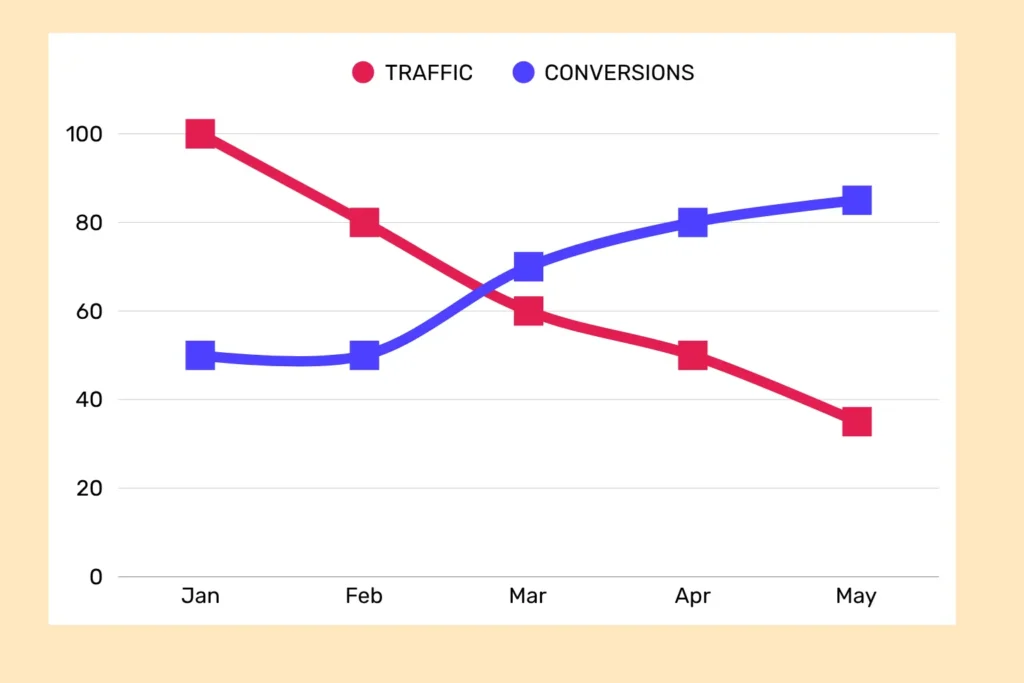
Traffic? It’s said that it might go down while brand awareness & conversions go up. Rankings? Multiple specialists have pointed out that they’re irrelevant when people aren’t clicking through from search results. (Zero Click anyone?!) Backlinks? Still useful, I’ve heard, but not the primary driver of success.
From the content I’ve consumed, here are the new metrics that actually matter:
The New KPIs Every Expert Talks About
AI Citation Rate - This, I’ve learned, is how often AI systems mention your brand when discussing topics in your expertise area. It’s being described as the new #1 ranking.
Branded Search Volume - The specialists consistently point out that when AI systems cite you without linking, people remember your name and search for you directly later. They recommend tracking increases in branded search terms.
Cross-Platform Consistency - Multiple experts emphasize the importance of getting cited across ChatGPT, Claude, Perplexity, and Google AI Overviews. They say consistency indicates strong semantic authority.
Setting Up Measurement Systems (What the Experts Recommend)
You need to establish baselines before you start optimizing. Use tools to measure your current AI citation rates, then track improvements over time.
There’s a consistent recommendation to set up Google Analytics to track referral traffic from AI sites. It’s suggested you build dashboards that show the metrics that actually matter for AI optimization.
Most importantly, a recurring piece of advice is to be patient. It’s often pointed out that AI citation improvements take time to translate into business results. But when they do, the impact is often more significant and longer-lasting than traditional SEO wins.
What the Experts Predict Is Coming Next
Based on the forward-thinking experts I’ve studied, we’re still in the early innings of this transformation.
What’s clear is that AI systems are getting smarter, faster, and more sophisticated every month. New platforms are launching. User behavior is evolving. The consistent prediction is that the companies that win will be the ones that stay adaptable and keep learning.
But here’s what multiple experts seem confident about: the principles covered in this research aren’t going anywhere. Semantic chunking, trust signal engineering, and citation optimization will remain relevant regardless of which AI platforms dominate.
The key, strategic thinkers say, is building systems and processes that can evolve with the technology, rather than tactics that become obsolete when the next update drops.
How the Experts Stay Current
Follow the Right People: A common suggestion is to follow Aleyda Solis, Mike King, Duane Forrester, and more.
Test Constantly: Many emphasize not just reading about new strategies, but testing them. The AI optimization landscape changes too quickly to rely on outdated information.
Join Communities: The best insights, it is said, come from practitioners sharing real experiences, not from theoretical discussions.
Invest in Education: It has been emphasized that this field is evolving so quickly that continuous learning isn’t optional; it’s survival.
Want to see what this looks like for your business?
Get a free 5-minute video showing how Expert Insight Sessions can turn your expertise into content that works.
Get My Free VideoThe Bottom Line (Based on Everything I’ve Learned)
Look, I could have written a 200-page academic analysis of everything I’ve consumed over the past nine months. But from what the leading voices are saying, you don’t need theory, you need actionable insights.
Here’s what matters, based on every credible source I’ve followed: AI systems are already mediating between your brand and your audience. The question isn’t whether this shift will happen, it’s whether you’ll be ready for it.
Strategic thinkers believe that the companies that embrace LLM optimization now, while their competitors are still chasing traditional SEO metrics, will build sustainable competitive advantages that will be incredibly difficult to overcome.
However, a common warning is that this window won’t stay open forever. As more people catch on to these strategies, the early-mover advantage will diminish.
From everything I’ve learned, the choice is clear: adapt now and lead, or wait and spend years playing catch-up.
After 648 hours of expert content, I know which approach makes sense.
References and Resources (some of the many various pieces of content I consumed in the past 9 months):
-
https://duaneforresterdecodes.substack.com/p/the-seo-industry-is-teaching-the
-
https://www.wix.com/seo/learn/resource/vector-embedding-for-seo
-
https://searchengineland.com/the-shift-to-semantic-seo-what-vectors-mean-for-your-strategy-452766
-
https://moz.com/blog/internal-linking-opportunities-with-vector-embeddings
-
https://www.lumar.io/blog/best-practice/semantic-search-explained-vector-models-impact-on-seo/
-
https://www.linkedin.com/pulse/what-vectors-word-embeddings-ai-seo-syam-k-s-zlduc
-
https://screamingfrog.club/en/embeddings-seo-screaming-frog/
-
https://gofishdigital.com/blog/openai-patent-semantic-search/
-
https://www.linkedin.com/pulse/how-we-use-vector-embedding-seo-specialist-g%C3%BClenber-han-gzmpf
-
https://www.screamingfrog.co.uk/blog/map-related-pages-at-scale/
-
https://www.growth-memo.com/p/the-first-ever-ux-study-of-googles
-
https://duaneforresterdecodes.substack.com/p/12-new-kpis-for-the-genai-era-the
-
https://www.aleydasolis.com/en/ai-search/google-query-fan-out/
-
https://searchengineland.com/generative-ai-powered-stack-456079

Chris Latham
Digital Marketing Strategist
Helping small businesses grow through smart digital marketing. Founder of Burger Gelato Media.
Want to see what this looks like for your business?
Get a free 5-minute video showing how Expert Insight Sessions can turn your expertise into content that works.
Get My Free Video